Acetaminophen: Preventing Harm through Safe Use
This bulletin highlights, for both healthcare professionals and manufacturers, key safety efforts, important resources, and strategic recommendations based on recent Health Canada initiatives supporting the safe use of acetaminophen in Canada.

- Review the patient’s medical and medication-use history to assess whether the patient has risk factors warranting a reduction in the acetaminophen dosage.
- Use the Health Canada guide “Let’s Talk About Acetaminophen” to educate patients on how to use acetaminophen safely.
- Ensure that doses for pediatric patients are calculated using an accurate weight and that an appropriate measuring device is used to administer all liquid doses.
INTRODUCTION
Despite its reputation for safety, acetaminophen has been identified as the leading cause of liver failure in Canada; approximately 4500 Canadians are hospitalized for acetaminophen overdose annually, and about 6% of these patients experience liver injury.1 Injury to the liver, which has occurred with both intentional and unintentional acetaminophen overdoses, may be irreversible.
Acetaminophen is a commonly used analgesic that is widely available in either single- or multiple-ingredient products. As of early 2017, almost 500 acetaminophen-containing products were marketed in Canada, with over 350 of them available as nonprescription, over-the-counter (OTC) products.2 Health Canada recently estimated that 4 billion dosage units of acetaminophen are sold in the country annually.1
This bulletin highlights, for both healthcare professionals and manufacturers, key safety efforts, important resources, and strategic recommendations based on recent Health Canada initiatives supporting the safe use of acetaminophen in Canada.
CANADIAN INITIATIVES TO SUPPORT SAFE USE OF ACETAMINOPHEN
Health Canada has conducted safety reviews (described in more detail below), issued public advisories, and instituted changes to the labelling requirements for OTC products containing acetaminophen. Practitioners and the public can find links to these and other related resources on a Government of Canada webpage dedicated to acetaminophen safety.3
ISMP Canada’s efforts to support the safe use of acetaminophen have included publishing an acetaminophen newsletter as part of its consumer medication safety program at SafeMedicationUse.ca,4 launching Spotlight on Acetaminophen,5 a webpage dedicated to acetaminophen safety, and publicizing acetaminophen safety strategies on social media.
HEALTH CANADA'S ACETAMINOPHEN SAFETY REVIEW AND RECENT REGULATORY CHANGES
In 2009, there was an initial safety review of non-prescription acetaminophen products which led to updated labelling standards that included increased warnings about the potentially serious and possibly fatal risk of liver injury in the event of acetaminophen overdose with these products.1 In 2014, Health Canada completed a greater in-depth safety review of acetaminophen,6 which showed that although most acetaminophen overdoses are intentional, nearly 20% are unintentional (see Box 1). Furthermore, the proportion of cases of acetaminophen-related injury due to unintentional overdose rose from 27% in 2006 to 45% in 2011. The safety review noted that severe liver injuries were more common in unintentional overdoses and involved either single-entity acetaminophen products or combination prescription medications containing both acetaminophen and an opioid.6
BOX 1. Possible causes of unintentional acetaminophen overdose
- Belief that over-the-counter medications cannot cause serious harm
- Lack of awareness of the importance of adhering to the maximum daily dose of acetaminophen
- Pediatric dose errors related to:
– miscalculation of doses
– incorrect measurement of doses - Confusion caused by umbrella names (i.e., use of the same brand name for products containing different ingredients)
- Taking more than one product containing acetaminophen at the same time
Although most liver injuries involving acetaminophen are caused by doses higher than 4 grams per day (the recommended daily maximum in Canada), the safety review noted that hepatotoxicity has been reported in patients receiving lower daily doses. Many of these patients had pre-existing liver disease, used alcohol excessively, were malnourished, and/or used acetaminophen for a longer duration than is recommended. In the United States, Johnson & Johnson, the manufacturer of Tylenol brand acetaminophen, voluntarily reduced the labelled daily maximum dose for adults from 4 g to 3 g,7 but the company has not implemented this labelling change in Canada.
Table 1 outlines selected risk-minimization options considered in the acetaminophen safety review, some of which have been implemented in other jurisdictions, such as the United States (US), the United Kingdom (UK), Australia (AU) and New Zealand (NZ).
To further address the problem of liver damage caused by acetaminophen, in September 2016 Health Canada released an updated labelling standard for OTC acetaminophen products, as well as an information update for the general public.8 Improvements to the labelling standard are summarized in Box 2.
BOX 2. Safety improvements to the Canadian labelling standard for OTC acetaminophen instituted in 20168
- Clearer instructions on packages emphasizing that
– the lowest effective dose should be used
– the recommended maximum daily dose should not be exceeded
– the recommended duration of treatment should not be exceeded
– precautions must be followed if taken with alcohol - Enhancement of layout to display that the product contains acetaminophen, by specifying the exact wording, font, and colour to be used, for both single- and multiple-ingredient products.
- Inclusion of a Drug Facts table, to provide instructions, warnings, and other safety information in a consistent, user-friendly format (mandatory by 2021).
- A recommendation that a calibrated dosing device should be provided in all liquid formulation packages and that directions for use should state “Use only the measuring device provided” (recommended, not mandatory).
Links to resource materials, including a fact sheet, “Let’s Talk About Acetaminophen”, and an “Acetaminophen Know Your Dose” poster, were implemented on Health Canada’s acetaminophen information webpage in 2016.3 In addition, Health Canada issued a notice to industry15 limiting the amount of acetaminophen in prescription combination products to 325 mg per dosage unit.
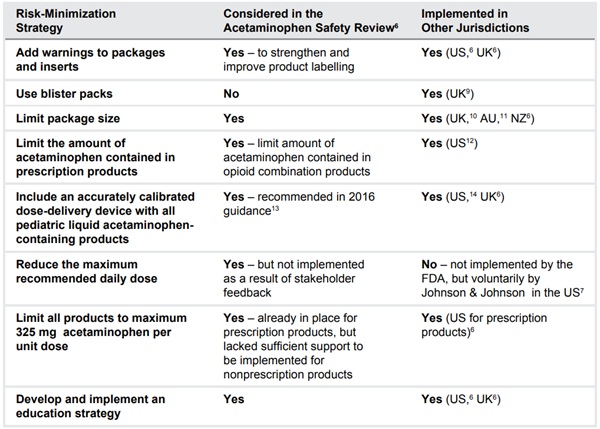
TABLE 1. Selected risk-minimization strategies
ANALGESIC ALTERNATIVES TO ACETAMINOPHEN
Both the public and healthcare professionals are increasingly aware of the potential for harm related to acetaminophen therapy. As such, it might seem to make sense to treat pain with other analgesic options, including nonsteroidal anti-inflammatory drugs (NSAIDs) or opioids; however, these medications carry their own risks and may not be appropriate for use by certain patients. NSAIDs may increase the risk of gastrointestinal, renal, and cardiovascular adverse events. The adverse effects of opioids include sedation and constipation, and use of these drugs is associated with the risk of addiction and overdose.16
Nonpharmacological strategies, including psychological and sociological interventions and exercise therapy, can be effective for treating chronic pain in some patients.17 Therefore, the risks and benefits of available therapies must be carefully weighed by the clinician and the patient and/or family, before deciding on a treatment plan.
RECOMMENDATIONS
Healthcare Providers
- Review the patient’s medical and medication-use history before prescribing or recommending acetaminophen, to identify use of any other acetaminophen containing products and to assess whether the patient has risk factors warranting a dosage reduction.
- Inform patients about using acetaminophen safely; use the Health Canada guide Let’s Talk About Acetaminophen to reinforce this information.18
- For pediatric patients, assist parents in the following aspects of therapy:
– calculating the dose of acetaminophen required
– ensuring the child’s weight has been determined accurately, in both pounds and kilograms, given that the Canadian labelling standard permits dosing to be expressed in either of these units (emphasize to parents that they should read the label directions carefully to ascertain the unit of measure for weight, as this unit may vary from one product to another)
– understanding the amount (dose) to be administered, whether in tablet or liquid form
– knowing about an appropriate measuring device for liquids and how to use it - Provide patients with information about nonpharmacological options to treat pain.
Manufacturers
- Implement the measures recommended by Health Canada for acetaminophen packages:
– provide a Drug Facts table, as outlined in the 2016 Health Canada Labelling Standard8,13
– provide an appropriate, accurately calibrated dosing device for all liquid preparations - Reduce the labelled maximum daily dose recommendation for acetaminophen, as has been done voluntarily by some manufacturers in other jurisdictions, despite the fact that this labelling change has not been mandated in Canada or elsewhere.
- Although not required by Health Canada, eliminate the use of umbrella names. This measure, as well as the requirement to indicate “contains acetaminophen” on the primary display panel, can inform consumers and reduce confusion among different products.
- When designing package labels, incorporate the recommendations from the Good Label and Package Practices Guides for Prescription Drugs and Non Prescription Drugs and Natural Health Products, as well as the International Medication Safety Network’s statement “Making Medicines Naming, Labeling and Packaging Safer”.19
CONCLUSION
In spite of efforts to enhance the safety of acetaminophen use, incidents of serious liver injury from acetaminophen continue to be reported in Canada and globally. ISMP Canada supports ongoing monitoring of the incidence of hepatotoxicity from acetaminophen and the continued implementation of safety measures to mitigate the risk of harm from this commonly used medication.

The Canadian Medication Incident Reporting and Prevention System (CMIRPS) is a collaborative pan-Canadian program of Health Canada, the Canadian Institute for Health Information (CIHI), the Institute for Safe Medication Practices Canada (ISMP Canada) and Healthcare Excellence Canada (HEC). The goal of CMIRPS is to reduce and prevent harmful medication incidents in Canada.
Funding support provided by Health Canada. The views expressed herein do not necessarily represent the views of Health Canada.

The Healthcare Insurance Reciprocal of Canada (HIROC) provides support for the bulletin and is a member owned expert provider of professional and general liability coverage and risk management support.

The Institute for Safe Medication Practices Canada (ISMP Canada) is an independent national not-for-profit organization committed to the advancement of medication safety in all healthcare settings. ISMP Canada’s mandate includes analyzing medication incidents, making recommendations for the prevention of harmful medication incidents, and facilitating quality improvement initiatives.
Report Medication Incidents (Including near misses)
Online: ismpcanada.ca/report/
Phone: 1-866-544-7672
ISMP Canada strives to ensure confidentiality and security of information received, and respects the wishes of the reporter as to the level of detail to be included in publications.
Stay Informed
Subscribe to the ISMP Canada Safety Bulletins and Newsletters.
This bulletin shares information about safe medication practices, is noncommercial, and is therefore exempt from Canadian anti-spam legislation.
Contact Us
Email: cmirps@ismpcanada.ca
Phone: 1-866-544-7672
©2026 Institute for Safe Medication Practices Canada.