Advancing Appropriate Use of Antipsychotic Medications in Long-Term Care: Collaborative Action Needed across the Health Care System
Appropriate use of antipsychotic medications requires cross-sectoral efforts, including assessment of residents, discussion with residents/caregivers, optimal prescribing, appropriate monitoring, willingness to deprescribe, and strong communication across care transitions. This bulletin profiles a long-term care initiative designed to advance appropriate use of antipsychotic medications. This initiative supports an established national target and informs safe practices across the health care system, including acute, community, and long-term care settings.
INTRODUCTION
Appropriate use of antipsychotic medications requires cross-sectoral efforts, including assessment of residents, discussion with residents/caregivers, optimal prescribing, appropriate monitoring, willingness to deprescribe, and strong communication across care transitions. This bulletin profiles a long-term care (LTC) initiative designed to advance appropriate use of antipsychotic medications. This initiative supports an established national target and informs safe practices across the health care system, including acute, community, and LTC settings.
BACKGROUND
Rate of antipsychotic use in long-term care residents without a diagnosis of psychosis
National Target: 15%
In 2025, Canadian organizations, including a multidisciplinary panel of experts on appropriate use of antipsychotics in long-term care, recommended a new national target of no more than 15% for antipsychotic use in LTC residents without a diagnosis of psychosis.1 Data from 2024/25 indicate that the current rate of antipsychotic use for residents without psychosis in Canadian LTC homes is 24%, with high regional variability.2,3 This rate is higher than that for similar populations in Australia (18%) and the United States (10%).4
Antipsychotic medications are often prescribed for individuals who are experiencing delirium or distressing behaviours or if the behavioural and psychological symptoms of dementia become challenging. Antipsychotic medication use for behavioural symptoms carries known risk of harms6 and uncertain effectiveness.5 Since initiation of antipsychotics can occur outside of the LTC setting, practice changes will be needed across the health care system to meet the target.
ONTARIO APPROPRIATE USE OF ANTIPSYCHOTICS INNOVATOR NETWORK
The Ontario Appropriate Use of Antipsychotics Innovator Network* was an 8-month (August 2025 to March 2026) collaborative initiative aimed at supporting Ontario LTC homes in optimizing the appropriate use of antipsychotic medications.
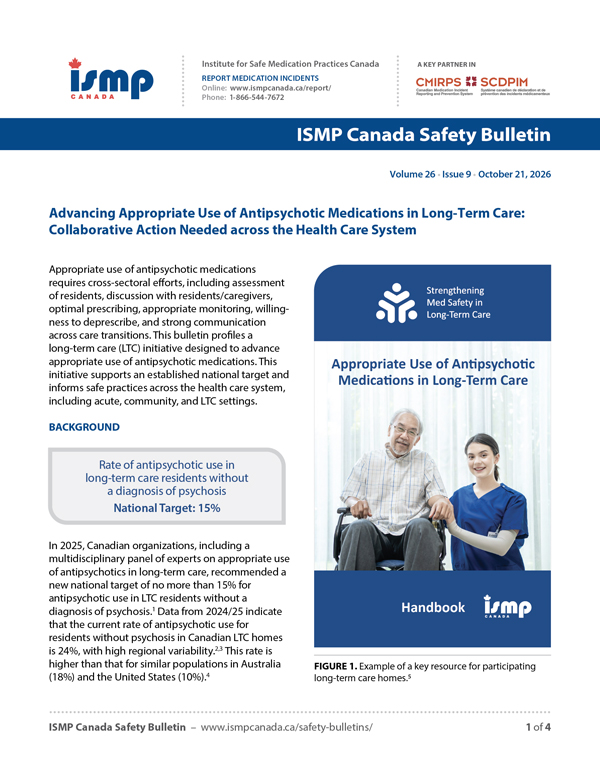
Participating LTC homes established individualized goals and collected baseline data. Supported by experts and key resources (Figure 1),5 they also completed self-assessments, reviewed their current practices to identify strengths and gaps, and developed quality improvement plans to meet their residents’ needs. Monthly workshops provided opportunities to learn from subject matter experts and to share experiences and progress with peers.
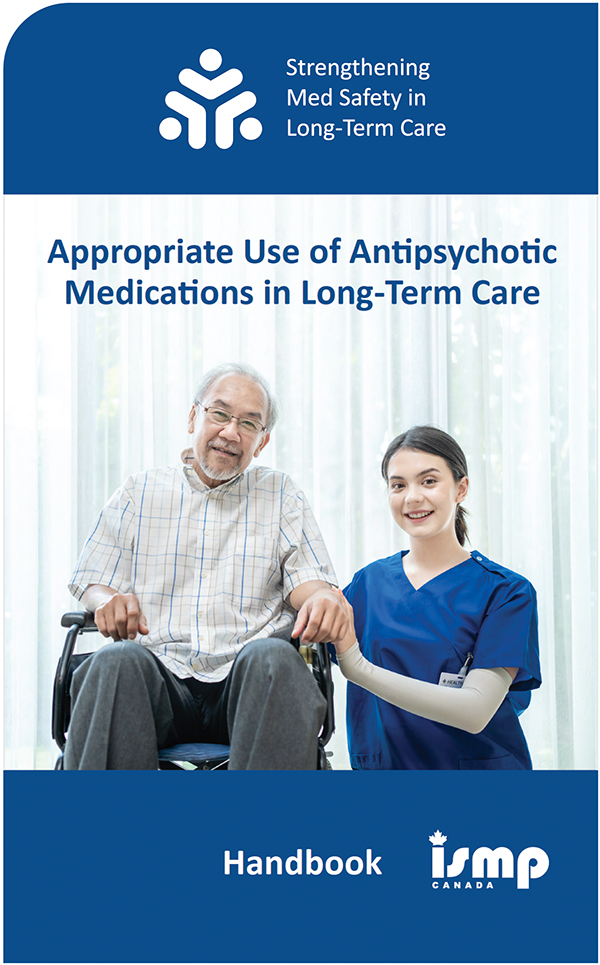
FIGURE 1. Example of a key resource for participating long-term care homes.5
At the time of analysis, voluntarily submitted data identified 1,249 residents across 18 homes who received project-related interventions aimed at improving antipsychotic medication use. Specifically, 134 residents had their antipsychotic medications reduced or discontinued following assessment and care planning.
Other homes focused on procedural or structural initiatives related to the appropriate use of antipsychotics, and positive outcomes included improved documentation related to responsive behaviours and the indications for antipsychotics, more effective team meetings focused on the appropriate use of antipsychotics, better identification of nonpharmacological interventions, and enhanced escalation-of-care pathways.
RECOMMENDATIONS FOR ACUTE, COMMUNITY, AND LONG-TERM CARE SETTINGS
The project findings informed 3 key areas of opportunity for improvement: overprescribing, need for behavioural support, and insufficient medication management at transitions of care. Recommendations were developed for each area to advance safe practices across the health care system.
Reduction of Overprescribing
- Use pharmacological interventions only if the symptoms or behaviours become distressing and/or potentially dangerous to the resident/patient or others, and nonpharmacological approaches have failed.
- When initiating antipsychotic medication, document the indication, the expected benefits, and a timeline for reassessment (including the anticipated trajectory and dosing parameters).
- Regularly assess the use of antipsychotic medication for possible deprescribing, with
- an evaluation of effectiveness against target behaviours and tolerability
- a review of the therapy against current treatment guidelines for responsive behaviour
- communication with the resident/patient and caregiver.
- Include the effects of antipsychotic medication in the differential diagnosis of changes in the health status of a resident/patient (e.g., increased confusion or somnolence, falls).
Optimization of Behavioural Support
- Provide training to health care providers and primary caregivers in the management of behavioural and psychological symptoms of dementia.
- Facilitate the use of nonpharmacological interventions, such as distracting task-oriented activities, music therapy, and physical exercise.
- Develop pathways for escalation of care to specialized personnel or programs for advice on nonpharmacological interventions.
- Inquire from caregivers about social history and past interests to better understand the meaning behind certain behaviours.
Enhancement of Medication Management at Transitions of Care
- Optimize medication management at transitions of care (e.g., hospital discharge, LTC home admission) with multidisciplinary, comprehensive medication reviews.
- Create an up-to-date list of medications (with the indications, where possible) using the best possible medication history (BPMH) interview guide.7
- Reconcile medication orders against the BPMH to reflect current medication use.
- Document past medications trialled (and the associated responses) to inform present and future treatment choices.
CONCLUSION
The national target of antipsychotic use for no more than 15% of LTC residents without a diagnosis of psychosis is achievable with engagement across the health care system. The findings of the Ontario Appropriate Use of Antipsychotics Innovator Network project informed 3 key areas of opportunity for improvement—specifically, implementation of safety strategies to reduce overprescribing, optimize behavioural support, and enhance medication management at transitions of care—to guide the appropriate use of antipsychotic medications in all care settings.
KEY RESOURCES
- This video demonstrates how a shared decision-making model with residents/caregivers can improve safe use and management of medications.
- The Appropriate Use of Antipsychotic Medications in Long-Term Care Handbook (Figure 1) is designed to support teams in LTC homes to advance the appropriate use of antipsychotic medications for the safety and well-being of their residents.
- This best possible medication history (BPMH) interview guide can help in creating an up-to-date list of current medications and can also support the medication reconciliation process.
- The 5 Questions to Ask About Your Medications can be used to guide conversations between residents/patients, their caregivers, and the health care team.
- Additional resources to share with residents/caregivers are available here: https://ismpcanada.ca/resource/ltc/resident-and-family-engagement/

The Canadian Medication Incident Reporting and Prevention System (CMIRPS) is a collaborative pan-Canadian program of Health Canada, the Canadian Institute for Health Information (CIHI), the Institute for Safe Medication Practices Canada (ISMP Canada) and Healthcare Excellence Canada (HEC). The goal of CMIRPS is to reduce and prevent harmful medication incidents in Canada.
Funding support provided by Health Canada. The views expressed herein do not necessarily represent the views of Health Canada.

The Healthcare Insurance Reciprocal of Canada (HIROC) provides support for the bulletin and is a member owned expert provider of professional and general liability coverage and risk management support.

The Institute for Safe Medication Practices Canada (ISMP Canada) is an independent national not-for-profit organization committed to the advancement of medication safety in all healthcare settings. ISMP Canada’s mandate includes analyzing medication incidents, making recommendations for the prevention of harmful medication incidents, and facilitating quality improvement initiatives.
Report Medication Incidents (Including near misses)
Online: ismpcanada.ca/report/
Phone: 1-866-544-7672
ISMP Canada strives to ensure confidentiality and security of information received, and respects the wishes of the reporter as to the level of detail to be included in publications.
Stay Informed
Subscribe to the ISMP Canada Safety Bulletins and Newsletters.
This bulletin shares information about safe medication practices, is noncommercial, and is therefore exempt from Canadian anti-spam legislation.
Contact Us
Email: cmirps@ismpcanada.ca
Phone: 1-866-544-7672
©2026 Institute for Safe Medication Practices Canada.