New Learning from an Analysis of Incidents Related to Paxlovid
This supplement describes learning from a recent analysis of incidents related to Paxlovid, which is used to treat mild to moderate COVID-19 in adults at high risk for progression to severe disease. New learning is shared to help improve drug interaction management and prescription transfer communication.
INTRODUCTION
Paxlovid consists of co-packaged nirmatrelvir and ritonavir tablets and is approved for the treatment of mild to moderate COVID-19 in adults at high risk for progression to severe disease.1 Shortly after product launch, a safety bulletin published in February 2022 shared learning from an analysis of incident reports.2 A recent analysis of 74 reports (submitted to the Canadian Medication Incident Reporting and Prevention System* between January 2022 and July 2025) was conducted, and new learning is shared here.
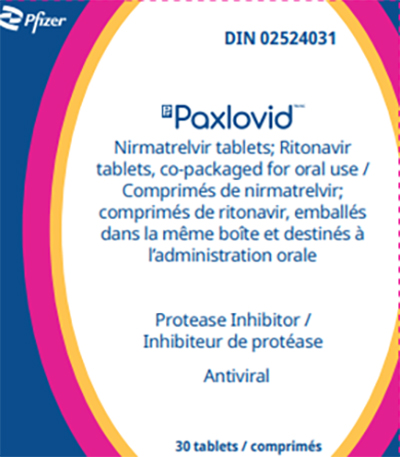
Image provided by Pfizer Canada
NEW LEARNING
THEME: Drug Interaction Management
The management of drug interactions is a critical aspect of the safe use of Paxlovid, given that ritonavir is known to interact with many medications. The analysis demonstrated a need for careful clinical assessment and management of interactions.
Incident example: A patient with adrenal insufficiency was started on Paxlovid. The patient was advised to reduce their usual hydrocortisone dose because of a possible interaction between hydrocortisone and Paxlovid. However, in the context of a viral illness, this patient required higher doses of hydrocortisone to prevent adrenal crisis. This situation demonstrates the need for individualized assessment.
THEME: Prescription Transfer Communication
Many community pharmacies maintain limited on-hand Paxlovid inventory due to the high carrying cost. As such, for timely initiation, Paxlovid prescriptions are often transferred to another pharmacy. The analysis identified opportunities to improve the prescription transfer process and communications.
RECOMMENDATIONS
- Consider each patient’s individual situation when assessing drug interactions, including what condition is being treated by each medication. Reach out to specialists for guidance if needed.
- Ensure that patient/caregiver engagement includes a plan with instructions to hold/reduce interacting medications and when to resume them. Some pharmacies have instituted a follow-up call program to ensure that previous medications/doses are resumed.
- When receiving a Paxlovid prescription transfer, request information from the transferring pharmacy about the patient’s renal function and their other medication use to enable assessment of the clinical appropriateness of the prescription.

The Canadian Medication Incident Reporting and Prevention System (CMIRPS) is a collaborative pan-Canadian program of Health Canada, the Canadian Institute for Health Information (CIHI), the Institute for Safe Medication Practices Canada (ISMP Canada) and Healthcare Excellence Canada (HEC). The goal of CMIRPS is to reduce and prevent harmful medication incidents in Canada.
Funding support provided by Health Canada. The views expressed herein do not necessarily represent the views of Health Canada.

The Healthcare Insurance Reciprocal of Canada (HIROC) provides support for the bulletin and is a member owned expert provider of professional and general liability coverage and risk management support.

The Institute for Safe Medication Practices Canada (ISMP Canada) is an independent national not-for-profit organization committed to the advancement of medication safety in all healthcare settings. ISMP Canada’s mandate includes analyzing medication incidents, making recommendations for the prevention of harmful medication incidents, and facilitating quality improvement initiatives.
Report Medication Incidents (Including near misses)
Online: ismpcanada.ca/report/
Phone: 1-866-544-7672
ISMP Canada strives to ensure confidentiality and security of information received, and respects the wishes of the reporter as to the level of detail to be included in publications.
Stay Informed
Subscribe to the ISMP Canada Safety Bulletins and Newsletters.
This bulletin shares information about safe medication practices, is noncommercial, and is therefore exempt from Canadian anti-spam legislation.
Contact Us
Email: cmirps@ismpcanada.ca
Phone: 1-866-544-7672
©2026 Institute for Safe Medication Practices Canada.